
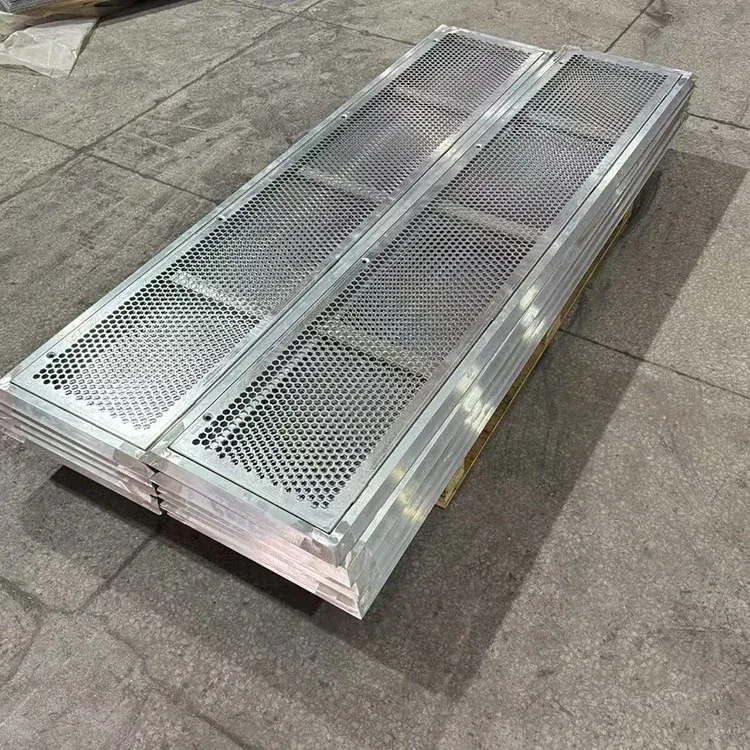
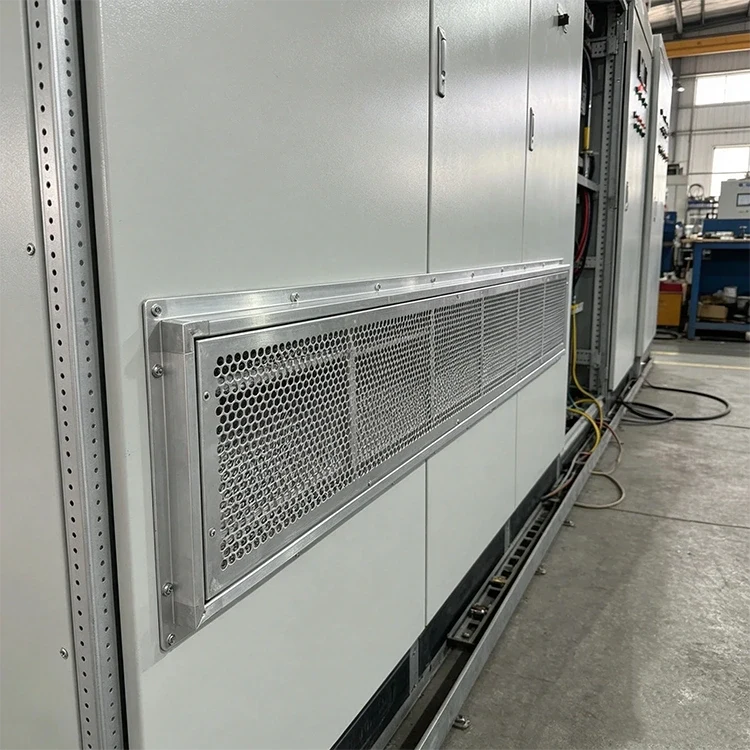
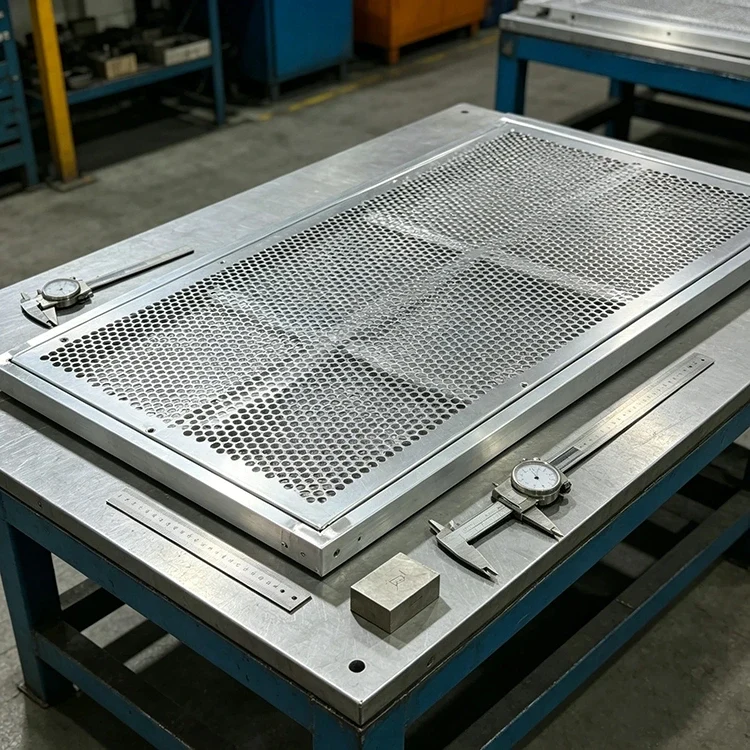
Xiamen Huimei specializes in custom perforated metal frame panels. Made from premium aluminum, stainless steel, or galvanized carbon steel, our panels feature precision CNC punching, welded reinforcement, and a refined finish. The reinforced frame and uniform perforation pattern provide versatile functionality, including ventilation, heat dissipation, dust protection, drainage, and noise reduction.
Engineered for industrial applications, our perforated metal frame panels combine a precision-perforated core with a fully welded, reinforced frame. This design ensures superior rigidity, flatness, and resistance to deformation compared to standard single-sheet plates.
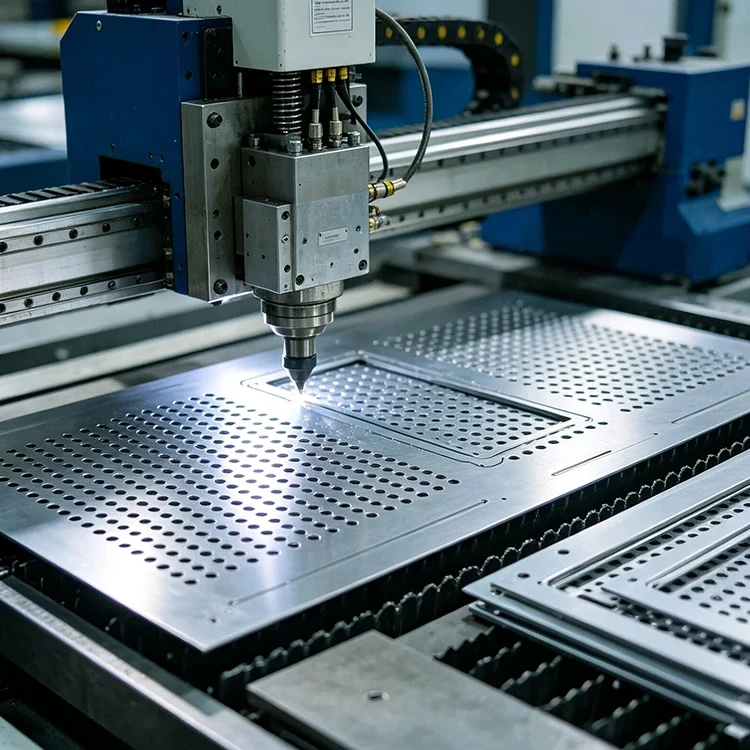
Crafted from premium metals via CNC punching, they feature uniform apertures and smooth, burr-free edges. The open structure facilitates optimal airflow, heat dissipation, and drainage, while effectively shielding equipment from dust and debris. Perfect for automation machinery, control cabinets, and architectural ventilation, we offer full customization and non-standard designs to meet your specific requirements.
|
Project |
Custom Non-Standard Perforated Sheet Metal |
|
Material |
Aluminum Alloy, 304/316 Stainless Steel, Galvanized Carbon Steel |
|
Sheet Thickness |
1.0mm - 4.0mm as required |
|
Perforation Patterns |
Standard round holes; hole diameter, pitch, and arrangement are fully customizable to non-standard requirements |
|
Surface Treatment |
Aluminum: Mill finish / Anodizing; Stainless Steel: Brushed & passivated; Carbon Steel: Galvanized / Electrostatic powder coating |
|
Manufacturing Process |
CNC bending, seamless welding reinforcement, weld seam grinding & leveling, deburring treatment |
|
Core Functions |
Ventilation & heat dissipation, water drainage & dust removal, isolation & protection, noise reduction, equipment dust-proofing |
● Custom Dimensions: Length, width, and frame height fully adjustable to drawings.
● On-Demand Perforation: Custom hole size, pitch, and zones; supports selective perforation.
● Material Flexibility: Tailored thickness for load-bearing; options include aluminum, stainless steel, and galvanized sheet.
● Integrated Processing: One-stop fabrication including deburring, weld polishing, tapping, and bending for ready-to-assemble delivery.
● Seamless Integration: Quotes based on CAD, samples, or specs; prototyping supported before mass production.
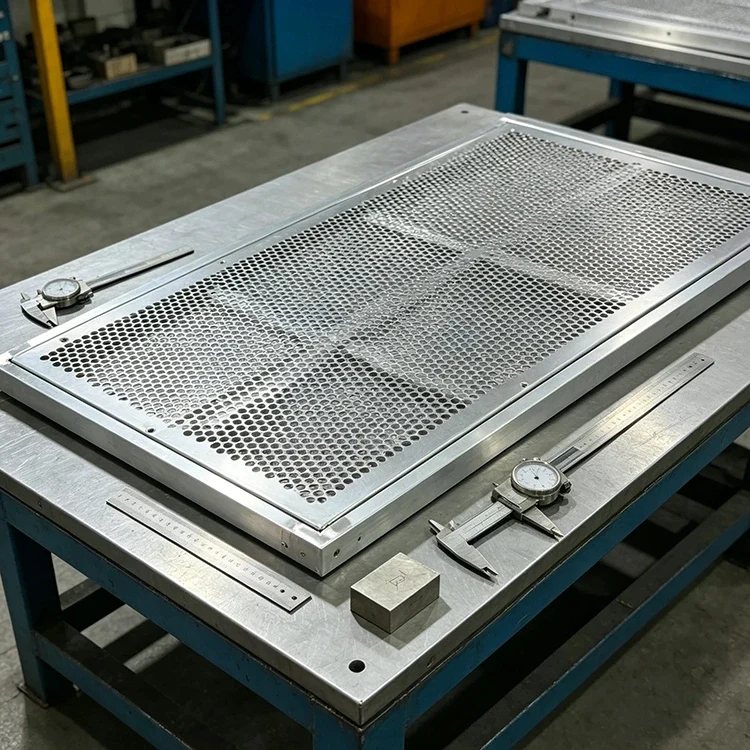
● In-House Precision Control: End-to-end fabrication ensures strict quality control, ideal for industrial batch orders.
● Core Steps: CNC punching, bending, welded reinforcement, seam grinding, and flatness calibration.
● Final QA: Material-specific surface treatments followed by a comprehensive inspection of hole positioning, dimensions, and flatness.
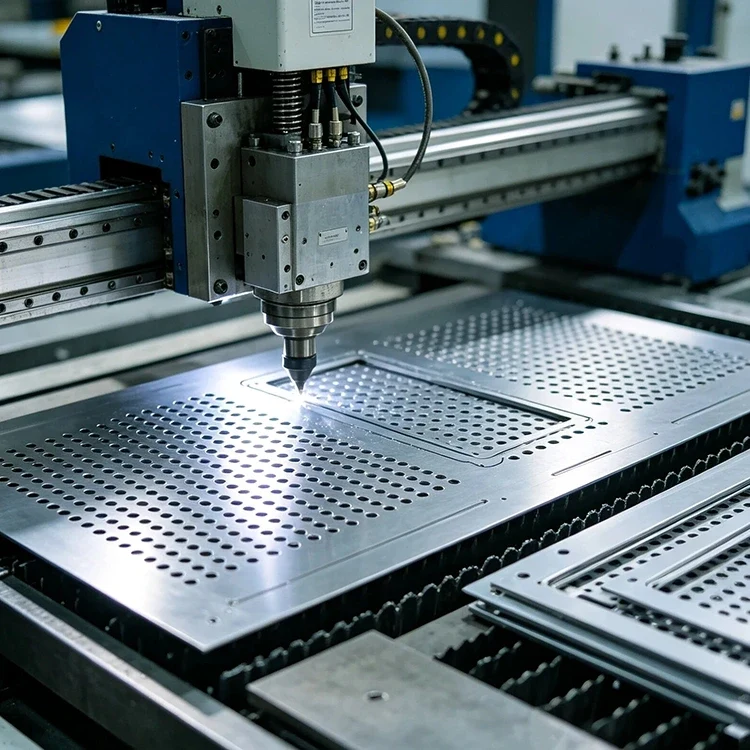
● Perforated Design for Ventilation and Drainage: Uniform circular perforations facilitate airflow, rapid heat dissipation, and efficient drainage of rainwater and fluids, preventing water or dust accumulation and making the panel suitable for humid outdoor environments.
● Reinforced Frame for Structural Stability: An integrated welded-edge frame provides superior rigidity and load-bearing capacity compared to standard thin perforated sheets, minimizing warping and wobbling for large-format panels.
● Multiple Material Options: Aluminum alloy offers a lightweight, rust-resistant solution; stainless steel resists salt-spray corrosion; galvanized carbon steel provides cost-effectiveness. Customers can select the appropriate material based on load requirements and environmental conditions such as outdoor exposure or corrosiveness.
● Versatile Application: The panels serve as protective barriers against foreign objects without obstructing visibility, effectively meeting needs for ventilation, visual monitoring, and heat dissipation.
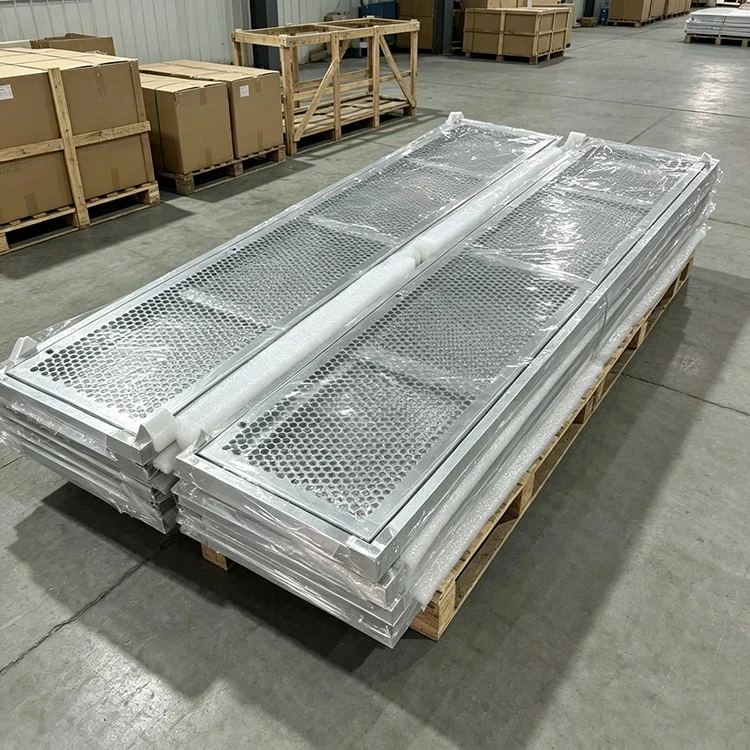
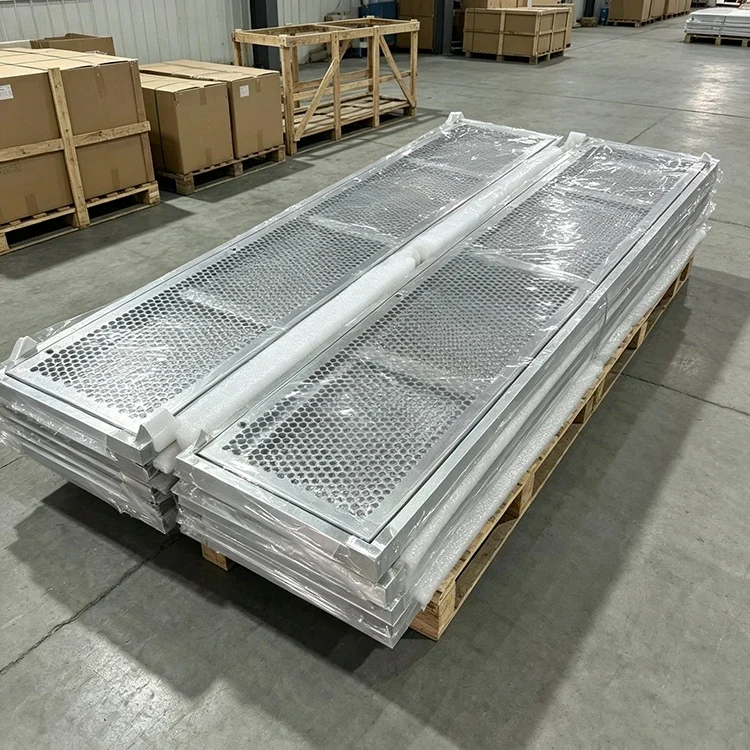
To ensure safe transit, panel surfaces are covered with protective film, with EPE foam sheets interleaved between panels and corner protectors installed to prevent impact damage. Small components are securely packed in cartons, while large or long panels are shipped in sturdy plywood crates to prevent bending or abrasion.
A: Manufactured via CNC punching, precision bending, and welding, each panel undergoes rigorous flatness correction, aperture inspection, and deburring. This ensures the dimensional accuracy and consistent quality required for seamless industrial assembly.
A: We offer full customization of dimensions, perforation patterns, materials (including aluminum and stainless steel), and surface finishes. Manufacturing based on custom drawings or samples is also available.
A: Aluminum alloy panels maintain structural integrity with a reinforced frame and proper thickness. For large-span applications, we recommend increased material thickness or additional stiffeners to prevent deformation.
A: Yes. We create custom zoned structures combining perforated ventilation areas with solid sealing panels, accommodating complex assembly needs.
A: Aluminum alloy is ideal for lightweight, cost-effective indoor use. For outdoor, coastal, or corrosive environments, we recommend 304/316 stainless steel for superior corrosion resistance and durability.
A: Yes. We offer prototyping for all non-standard custom products to verify flatness, perforation precision, and assembly fit. Mass production begins only after sample approval to mitigate risks.